

The spinning wheel is one of those ideas so simple it feels like it has always existed. Put options around a circle, give it a spin, watch where it lands. That basic mechanic has survived centuries of changing technology and taste, jumping from wooden carnival wheels to prime-time television to the phone in your pocket. Its journey says something about why chance is so reliably entertaining.
The carnival origins
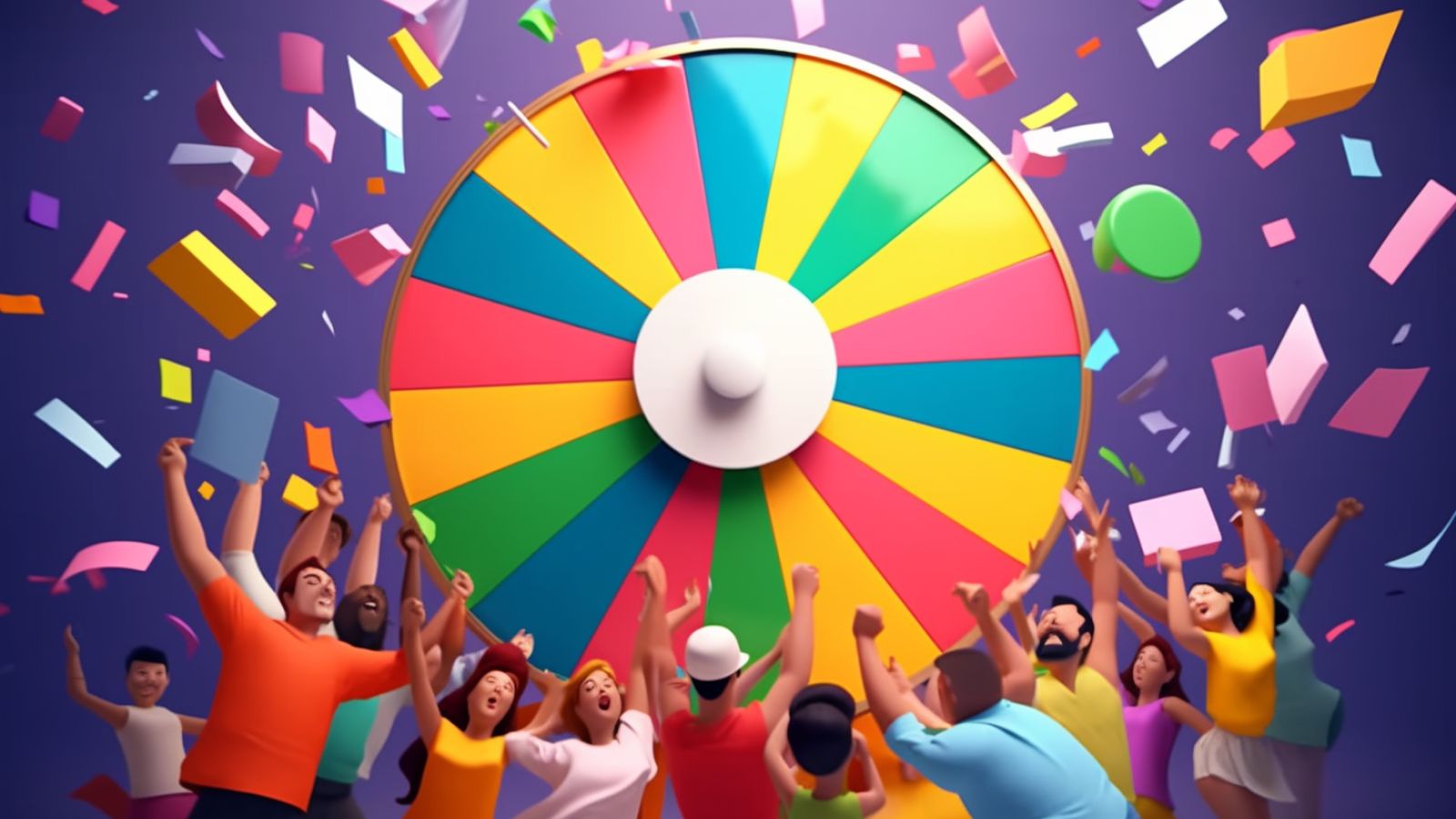
The spinning wheel's popular roots are at the fairground. Carnival prize wheels — big, colorful, clattering as a leather flapper ticked past the pegs — were a midway staple for generations. Pay your money, watch the wheel slow, and hope it stopped on a prize rather than a blank. The appeal was pure and immediate: a moment of suspense, a public result, and the tiny thrill of a chance you couldn't control. That formula needed no explanation, which is part of why it spread so widely.
These wheels weren't just about winning. The spectacle itself drew crowds — the clatter, the slowing spin, the collective held breath as it crept toward a stop. That theatrical quality, the drama of an outcome revealing itself slowly, is something every later version would inherit.
The television era
The wheel found its biggest stage on television. Game shows built entire formats around spinning wheels, turning the carnival's private thrill into mass entertainment watched by millions. The televised wheel added stakes and personalities, but the core was unchanged: a slowing spin, a suspenseful stop, a result nobody could predict. Broadcasters understood what carnival barkers had known all along — that watching chance resolve in real time is genuinely gripping, whether there's money on the line or not. The wheel gave a show a built-in dramatic beat, a reliable moment of tension that needed no writing and never got old, night after night and season after season.
Television also cemented the wheel as a shared cultural symbol. The image of a big spinning wheel became shorthand for luck, risk, and reward, understood instantly across generations and languages. That universal legibility — a symbol everyone reads the same way without a word of explanation — set the stage for the wheel's next great leap forward.
The digital jump
When entertainment moved onto screens, the wheel came along naturally. Early digital versions simply recreated the carnival wheel in software, but the medium quickly revealed something the physical wheel never could offer: near-infinite customization. A wooden wheel has fixed slices painted on once. A digital wheel can hold anything you type, change instantly, and be reshaped for any purpose in seconds. You can build a custom one for literally any decision on the classic spin the wheel, from restaurant choices to chore assignments.
That flexibility transformed the wheel from a fixed attraction into a general-purpose tool. Suddenly it wasn't just for prizes — it was for picking names, making decisions, running classroom activities, choosing what to watch. The same mechanic that entertained fairground crowds became a practical everyday utility, available free on any device.
Why the format endures
What's striking is how little the core has changed across all these forms. The carnival wheel, the TV wheel, and the app wheel all rely on the identical psychological hook: the suspense of watching a random outcome slowly resolve. We are drawn to uncertainty when the stakes are low and the reveal is visible, and a spinning wheel is almost the perfect delivery mechanism for that particular pleasure. It's fair, it's transparent, and it stretches a split-second random result into a few seconds of genuine anticipation.
Even the humblest use of the format taps this. A quick decision spin carries a faint echo of the carnival thrill, which is part of why turning a choice into a spin feels lighter and more fun than just deciding. The playful psychology behind that is something we dig into further in our look at the allure of spin the wheel games, where the same principle applies at the smallest scale. Even a plain color wheel carries a faint version of the thrill.
Where it goes next
The wheel has proven it can survive any shift in technology by carrying its essence — visible, suspenseful chance — into each new medium intact. Whatever comes after apps, it's a safe bet the spinning wheel will make the jump too, because the thing it delivers isn't tied to any particular technology. It's tied to something in us: the small, reliable delight of watching fate resolve one slow rotation at a time. From painted wood to pixels, that hasn't changed, and it probably never will. What has changed is who gets to use it. The carnival wheel belonged to the barker; the television wheel belonged to the broadcaster. The app wheel belongs to everyone. Anyone with a phone can now conjure the same suspenseful, fair, crowd-pleasing mechanic that once required a wooden contraption and a fairground, and bend it to whatever they need — a raffle, a lesson, a dinner decision, a party game. That democratization is the quiet revolution buried in the wheel's long history. The format didn't just survive the jump to digital; it was set free by it, transformed from a spectacle you watched into a tool you wield. The essence stayed the same while the audience became the whole world, and that combination of timeless appeal and universal access is why the spinning wheel is likely to keep turning long after today's apps are forgotten.